
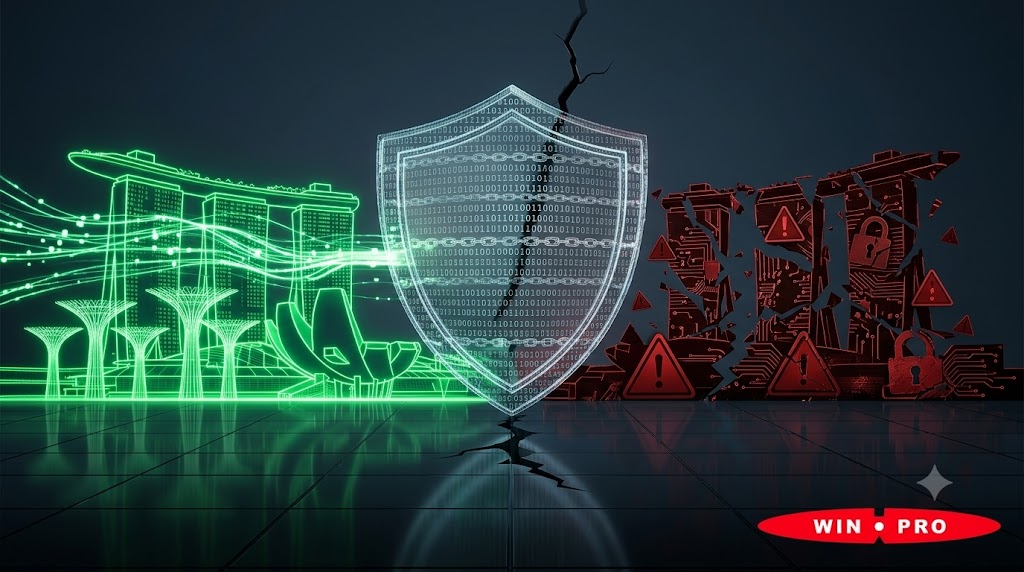
Vulnerability Assessment As A Business CyberSecurity Tool

Vulnerability assessment is a systematic process that identifies, evaluates, and prioritizes security weaknesses across your networks, applications, and AI-integrated systems. As Singapore businesses accelerate their adoption of AI and cloud technologies, regular vulnerability assessments have become an essential cybersecurity tool — helping organizations close security gaps before attackers exploit them, meet compliance requirements, and build the resilience needed to grow safely in a fast-changing digital landscape.
The Hidden Dangers of Vibe Coding and AI-Generated Code in Production Systems
With AI, Why Singapore Businesses Need CyberSecurity Vulnerability Assessment
Singapore businesses are changing fast with AI. We see 74% of small and medium enterprise owners planning to use AI by 2025. This change brings big chances for growth and better work.
But, the danger of cyber attacks is growing too. Cyber attacks now strike every 11 seconds, and 46% of SMEs face breaches in 2025. The cost of a data breach for small companies is $120,000, yet only 14% are ready. This shows a big gap between AI plans and security readiness.
AI-generated codes and fast development make your attack surface bigger. Traditional defenses can’t keep up. We believe that cybersecurity evaluation must grow with AI. Microsoft Security says AI attacks need AI defense, and analysis shows real results.
Companies using AI for security save $2.2 million on average. We see vulnerability assessment as a strategic competitive advantage. It helps with AI transformation and keeps business safe.
AI Adoption is Silently Expanding Singapore’s Cyber Attack Surface
Every AI tool in Singapore’s business world adds new risks. Yet, most companies don’t see these dangers. They use AI to stay ahead but forget to secure it properly.
Adding more tech isn’t enough. AI systems connect to data and apps, needing special security. Small businesses are especially at risk, with 82% of ransomware attacks hitting them.
Small businesses face more social engineering attacks. AI makes these risks worse by opening up new attack paths. We need new ways to find and fix AI-related security issues.
The Hidden Dangers of Vibe Coding and AI-Generated Code in Production Systems
AI coding tools are changing how software is made in Singapore. They help developers work faster but introduce security risks. Many companies don’t realize these risks until it’s too late.
AI code often lacks the security checks that human reviewers do. This means AI code can have big security flaws. We need special tools to find and fix these issues.
Developers use AI to write code without fully understanding it. This creates systems that are hard to secure. These systems can be vulnerable to attacks, but it’s hard to find these weaknesses.
We help companies set up checks to find these problems before they cause trouble. Finding flaws in AI code is hard. Companies need the right tools and knowledge to deal with AI risks.
Why IT Security Evaluation Must Include AI Model Integration Points
AI systems rarely work alone in businesses. They connect to important data and systems. These connections are weak spots that traditional security doesn’t cover.
Attackers target these weak spots because they are easy to get into. An AI system connected to a database can be a big risk if not secured properly. Standard security checks miss these AI risks.
Employees face more social engineering attacks, and AI makes these attacks worse. If one system is hacked, AI can help attackers get into others. We need to check AI connections for security risks.
Securing AI needs different rules than traditional security. We help companies watch how AI uses data and spot unusual activity. This way, they can keep their systems safe from AI threats.
Network Security Scanning Cannot Keep Pace with Rapid AI Deployment
AI is being used fast in Singapore, often in weeks. But security checks are slower, leaving gaps for attacks. Companies push AI to production quickly, skipping security checks.
Small companies are hit hard by ransomware because they can’t keep up with security. Traditional security checks can’t keep up with AI’s fast changes. By the time they find a problem, AI has changed again.
Cybercriminals use AI to find weaknesses faster than defenders can fix them. This creates a race where attackers win. Small businesses are especially vulnerable because they can’t afford advanced security.
We focus on constant security checks that keep up with AI. Traditional scans are not enough for AI’s fast pace. We use real-time monitoring to catch security issues before they become big problems.
AI systems need a lot of good data to work well, which can be a problem. Integrating AI with old systems is hard and risky. We help leaders balance the benefits of fast AI adoption with the need for security.
Comprehensive Vulnerability Assessment is Singapore’s Best Defense Against AI-Era Threats
As AI systems grow in businesses, a thorough vulnerability check is key. This method finds weaknesses before they are used by hackers. It helps protect both old IT systems and new AI ones.
Using AI for vulnerability management saves a lot of money. It finds threats faster and fixes them quicker. This saves time and money, and reduces the chance of being hacked.
Singapore businesses face a big challenge. They need to protect their AI systems and keep their old systems safe. This requires special skills, constant checks, and a good plan for checking vulnerabilities.
Security Vulnerability Scanning and Penetration Testing Services for AI Infrastructure
Old ways of testing need to change to keep up with AI. We help find weaknesses in AI systems by simulating attacks. This helps avoid big problems.
Security vulnerability scanning must look at more than just the usual places. It needs to check cloud-based AI, containerized learning, and edge AI. Modern scanning looks at many threats.
-
- Model endpoint security: Testing how AI services are protected
- Data pipeline vulnerabilities: Checking how data is handled and stored
- Integration point weaknesses: Looking at how AI systems connect to other apps
- Development environment risks: Checking AI development pipelines
PatchSense AI shows how AI can help with security. It keeps an eye on security warnings and alerts when there’s a problem. This helps IT teams without costing a lot.
Testing AI systems helps find threats that others miss. We help pick the right tests for each business’s AI plans. This makes sure security grows with digital changes.
The Risk Assessment Methodology Every Singapore Business Must Implement
Most small businesses don’t check for vulnerabilities often. But, doing so can really help them stand out. We offer ways to make security checks useful for the business.
Our vulnerability management process starts with a full list of all AI systems and data. It finds hidden AI uses and gives a clear view of risks. This is the first step to managing risks well.
The method we suggest includes several important parts. They work together to keep systems safe:
| Assessment Phase | Key Activities | Business Impact |
|---|---|---|
| Discovery & Inventory | Automated asset identification, shadow AI detection, integration mapping | Complete visibility into attack surface and risk exposure |
| Threat Classification | AI-powered risk scoring, organizational matrix alignment, priority ranking | Efficient resource allocation to highest-impact vulnerabilities |
| Remediation Planning | Automated fix recommendations, implementation sequencing, validation testing | Reduced mean time to remediation and lower breach probability |
| Continuous Monitoring | Real-time threat detection, behavioral analysis, compliance tracking | Proactive defense against zero-day vulnerabilities and emerging threats |
AI uses risk matrices to classify threats. This keeps security checks consistent across the company. It also makes checks faster and easier for IT teams.
Our method looks at both technical and process weaknesses. It knows that security failures can come from bad policies, not just tech issues. It uses AI to help, but always with a human in charge.
Business leaders should watch certain numbers to see if their security is working:
-
- Mean time to detection: How fast they find new threats
- Mean time to remediation: How fast they fix problems
- Vulnerability recurrence rates: If the same problems keep happening
- Coverage percentages: How much of their AI they check regularly
This way of working makes it faster to respond to threats. It’s especially important for new threats that no one knows about yet. We help businesses improve in these areas.
How Cybersecurity Assessment Tools Detect System Weakness in Hybrid AI Environments
Hybrid environments are complex. They mix old systems, cloud services, and AI. Special cybersecurity assessment tools are needed to keep them safe.
These tools find threats across different systems. They see how attacks can move from old systems to AI. This is something simple checks can miss.
Tools need to work with old systems and new AI. We help make sure these tools fit together well. This way, businesses can protect more without disrupting their work.
Network vulnerability testing in these environments needs special tools. They must understand both old network protocols and new AI ways of communicating. These tools check:
-
- Traditional network traffic: How data moves and is protected
- API interactions: How AI systems talk to other apps
- Cloud service configurations: How cloud services are set up
- Data flows: How data moves between systems
These tools can spot problems even when old methods fail. They learn what’s normal for AI systems and alert when something’s off. This catches new kinds of threats.
AI tools can do tasks that used to need a whole team. They give alerts that fit each business’s needs. This lets smaller teams do more without spending a lot.
We see vulnerability management as a way to help AI grow, not hold it back. Businesses with good security plans can use AI safely. This approach helps them grow and stay safe.
Good security is more than just stopping hackers. It builds trust with customers, follows rules, and saves on insurance. Businesses that show they care about security can get ahead in a competitive market.
Singapore’s Competitive Edge Depends on Proactive Security Risk Evaluation
The financial stakes for Singapore businesses are high. Cyberattacks cost SMEs an average of $254,445, with some incidents reaching $7 million. Almost 1 in 5 businesses that get hit by cyberattacks go bankrupt or shut down.
Companies using AI without proper security risk analysis face big risks. This is especially true for SMBs, where 75% might not survive a ransomware attack. AI systems open up new ways for attacks, making it crucial to have strong IT security audits.
Singapore businesses have a big choice to make. The 90% of SMEs planning to invest in security over the next year is a key moment. Those that focus on strong compliance and risk management will stand out. Customers, partners, and investors look at security before they invest.
We believe in security that works with humans, like Microsoft Security’s vision for AI. This approach helps Singapore’s cyber talent gap by making teams smarter with automation. Our model helps companies get top security without slowing down innovation.
Companies that get AI and compliance right will shape Singapore’s digital future. They create value and innovation that people trust.
FAQs
Why do Singapore businesses need cybersecurity vulnerability assessment specifically for AI systems?
What are the specific risks of vibe coding and AI-generated code in production environments?
How frequently should Singapore businesses conduct penetration testing services for AI infrastructure?
What is the difference between traditional vulnerability scanning and AI-era cybersecurity assessment?
How does vulnerability management address the cyber talent gap facing Singapore businesses?
What risk assessment methodology should Singapore businesses implement for AI deployments?
How do cybersecurity assessment tools detect system weakness in hybrid AI environments?
What is the business case for investing in security risk evaluation for AI systems?
How does the human-in-the-loop approach apply to AI-powered vulnerability management?
What compliance requirements drive vulnerability assessment needs for Singapore businesses?
How do AI integration points create vulnerabilities that traditional security measures miss?
What metrics should Singapore business leaders track to measure vulnerability management effectiveness?