Singapore businesses face a growing volume of cyber threats. According to the Cyber Security Agency of Singapore (CSA), local businesses continue to face ransomware attacks, phishing attempts, and data breaches, with SMEs increasingly in the crosshairs.
Despite the rising risk, many businesses are still running without adequate network defences, such as a firewall.
Understanding the importance of firewall protection is the first step toward securing your network against threats that are actively looking for a way in.
What Is a Firewall in Cyber Security?
A firewall is a network security device, either hardware, software, or a combination of both, that monitors and controls incoming and outgoing network traffic based on predefined security rules.
Think of it as a barrier between your trusted internal network and untrusted external networks, such as the internet. Every connection attempt passes through it, and your firewall decides whether to allow or block it based on the rules your business has set.
One important distinction worth clarifying is the difference between a firewall and antivirus software. Antivirus targets threats that have already made it inside your system, while a firewall stops unauthorised access from reaching your system in the first place.
What Does a Firewall Do?
At its core, a firewall works by establishing checkpoints that filter web traffic. It allows or blocks data packets based on factors like source and destination IP addresses, port numbers, and application protocols.
Beyond filtering, your firewall can also monitor and log network activity, generating alerts whenever suspicious or unauthorised traffic is detected. This gives your team consistent visibility into what is happening across your network.
Modern firewalls go further still, where many now integrate intrusion prevention, application-layer inspection, and real-time threat response. This makes them a far more capable cybersecurity tool than a basic traffic filter.
Why Are Firewalls Important for Your Business?
Singapore’s cyber threat environment has grown more complex and more targeted. Businesses of all sizes are regularly exposed to attacks that exploit unprotected network entry points, and SMEs are no exception.
If you are asking, “Why do I need a firewall?”, the answer is that without one, your business has no active defence at the network perimeter.
In that context, operating without firewall protection exposes your business to data breaches, ransomware infections, and regulatory penalties. Each of these carries costs that far exceed the investment in putting proper controls in place.
Protection from Hackers
Hackers frequently target businesses by probing for unprotected network entry points and pairing technical scans with social engineering tactics to gain a foothold in your systems.
A firewall detects and blocks malicious incoming traffic before it can reach your internal systems or sensitive business data. It is the first barrier any attacker must get through.
Blocks Access to Unapproved Websites
Firewalls allow you to restrict employee access to specific websites, reducing your organisation’s exposure to malicious downloads, phishing pages, and inappropriate content.
You can set custom rules to block specific categories of sites, such as gambling platforms, illegal download services, or dubious e-commerce pages.
This also reduces the risk of employees inadvertently introducing malware into your network through unsafe browsing.
Protects from Malicious Code
Your firewall monitors both incoming and outgoing data traffic, logging unusual activity and flagging potential threats in real time. Repeated alerts on the same traffic patterns can serve as an early warning that your business is being targeted by a threat actor.
That early visibility gives your team the opportunity to take defensive action before a threat escalates into a full incident.
Limits Bandwidth Usage for Certain Programs
Firewalls can be configured to manage and allocate your network bandwidth, preventing specific applications or traffic types from consuming disproportionate resources.
For example, you can limit bandwidth for video streaming or large media file transfers during business hours. That keeps your network performing consistently and ensures business-critical applications are not disrupted by non-essential traffic.
Provides VPN Services
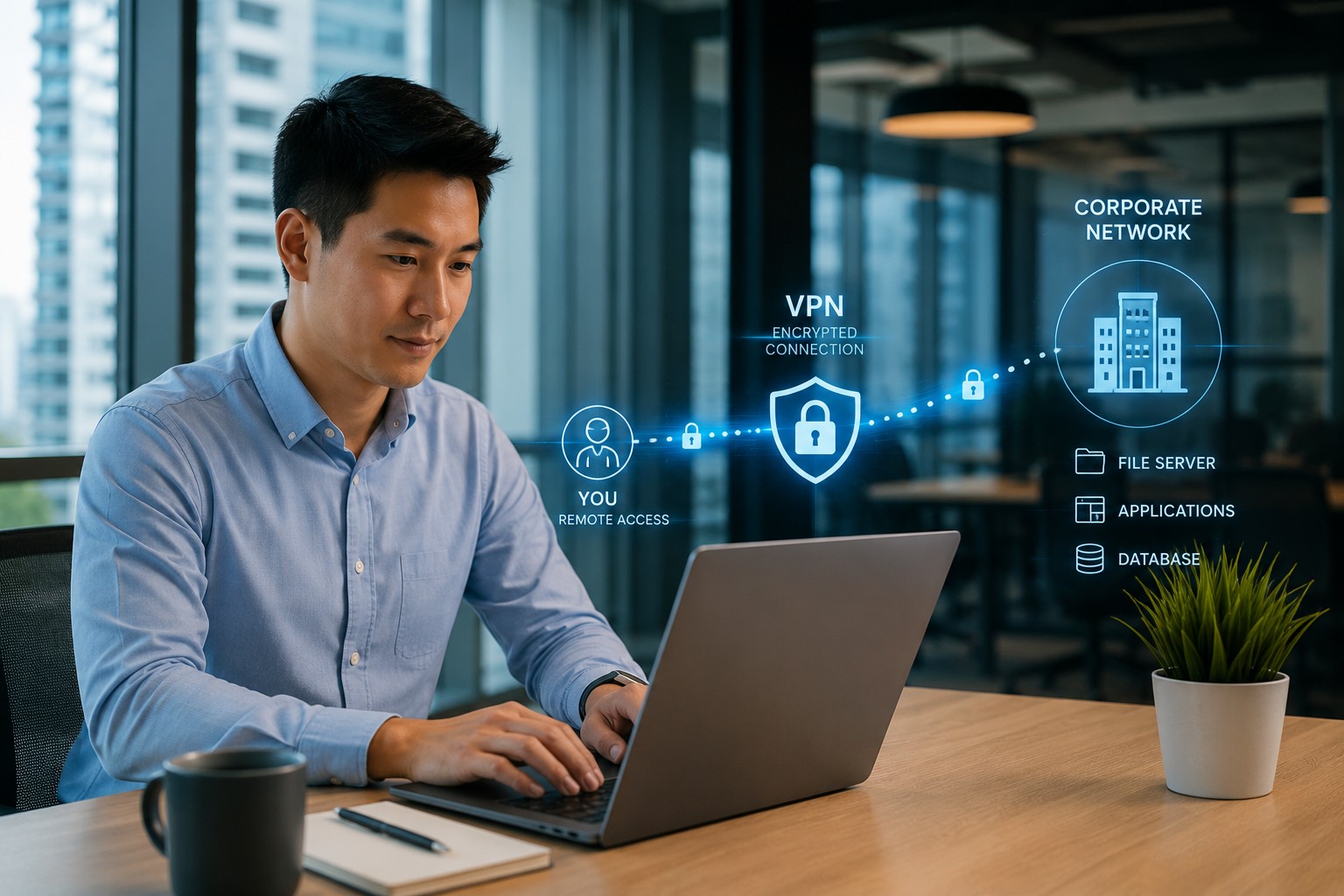
Many business-grade firewalls include built-in VPN functionality, enabling encrypted communication between remote workers and your company network.
Your firewall acts as a secure gateway, creating an encrypted tunnel between your local area network (LAN) and external locations.
This is particularly relevant in Singapore’s hybrid working environment, where staff regularly access company systems from outside the office. VPN capability through your firewall ensures that sensitive business communications remain private, even when transmitted over public networks.
Risks of Not Having a Firewall
Given all that a properly configured firewall does for your business, operating without one leaves significant gaps in your network defences:
- Unauthorised network access: With no barrier in place, external parties can probe your network for open ports and unprotected entry points without restriction.
- Ransomware and malware infection: Without perimeter filtering, malicious payloads have a clear path into your internal systems, and the recovery costs tend to exceed the cost of preventive measures.
- Data breaches and regulatory penalties: Incidents traceable to absent network controls can expose your business to PDPC enforcement action and financial penalties under the PDPA.
- Unmonitored outbound traffic: Without outbound filtering, sensitive data can leave your network undetected through compromised applications or insider activity.
- Prolonged operational disruption: Threats that bypass the perimeter penetrate deeper before detection, extending remediation timelines and business downtime.
- Reputational damage: A breach linked to absent network security can damage client relationships and, in regulated sectors like finance, healthcare, and government procurement, disqualify your business from future contracts.
Types of Firewalls
Not all firewalls are built the same, and the right choice depends on your business’s size, risk profile, and security requirements. The four main types are:
- Packet Filtering Firewall: As the most basic option, this firewall analyses data packets based on source and destination addresses and application protocols, allowing or blocking transfers accordingly.
- Proxy Service Firewall: By acting as a gateway between networks at the application layer, these prevent direct external connections and provide content caching alongside an additional layer of security.
- Stateful Inspection Firewall: Using dynamic packet filtering to monitor active connections, these firewalls make traffic decisions based on defined rules, connection states, and the context of previous network activity.
- Next-Generation Firewall (NGFW): The most advanced option, NGFW combines standard firewall capabilities with application-level inspection, integrated intrusion prevention, and real-time threat intelligence.
Firewall Configuration Best Practices
A firewall is only as effective as its configuration. An improperly set up firewall can leave critical gaps in your security posture, even if the underlying hardware or software is enterprise-grade.
To maintain a reliable setup, here are some best practices to keep in mind:
- Keep firewall software updated: Install the latest firmware patches and software updates regularly to protect against newly discovered vulnerabilities.
- Limit administrative access: Restrict firewall management to trusted individuals only to reduce the risk of accidental misconfigurations or insider threats.
- Regularly review and update firewall rules: Audit existing rules periodically to remove outdated policies and adapt to changes in your network environment.
- Monitor firewall logs for suspicious activity: Review log data consistently to identify unusual traffic patterns, repeated alerts, or signs of attempted intrusion.
- Test your firewall configuration regularly: Conduct routine testing to verify that your firewall is performing as expected and that no unintended access points have been introduced.
- Back up your firewall configuration: Maintain up-to-date backups of your firewall settings to enable rapid recovery in the event of a system failure or security incident.
If you are unsure where your current setup falls short, a cybersecurity gap assessment can surface the specific vulnerabilities that need addressing.
Protect Your Business from the Network Up
A firewall is a non-negotiable component of your business’s cybersecurity strategy. In Singapore’s evolving threat environment, having one properly deployed, configured, and actively monitored is foundational to keeping your network secure.
If you’re looking to build or strengthen your security infrastructure, Win-Pro is a trusted IT cybersecurity specialist with over 32 years of experience helping Singapore businesses establish and maintain strong security frameworks.
Taking things a step further, our VAPT services help identify vulnerabilities in your systems before attackers do.
Contact us to find out how we can help secure your business today.